
The Fix Everyone Tries First (and Why It Rarely Works Alone)
Here's the argument in almost every house with an attached garage: one person swears the garage door is letting in hot or cold air and driving up the energy bill, the other thinks that's nonsense because "the garage isn't even part of the house." To settle it, someone runs to the hardware store, grabs a roll of adhesive-backed weatherstripping, slaps it along the bottom of the door, and declares the problem solved.
It's a tempting fix because it's cheap, it takes twenty minutes, and you can literally see and feel the gap you just closed. The problem is that the bottom seal is usually the smallest leak in the system. If the door panels themselves are uninsulated sheet metal, if the weatherstripping along the sides and top is cracked or missing, or if the door is slightly warped and doesn't sit flush against the frame anymore, that new bottom strip is closing one door while three windows stay open.
Why an Attached Garage Affects Your Thermostat at All
A garage shares at least one wall with the living space, and in a lot of homes it also shares ductwork, water heater closets, or the AC condensate line route. When the garage gets extremely hot in summer or cold and damp in winter, that temperature difference pushes through the shared wall, through any ducts that run along the garage ceiling, and through the door into the house itself. Your thermostat doesn't know the heat came from the garage — it just knows the house is warmer than the setpoint, so the AC runs longer to compensate.
This matters more in homes where the water heater, furnace, or HVAC air handler sits in the garage, which is common in a lot of Central Valley construction. A leaky, uninsulated garage door turns that space into an oven in summer, and all that heat radiates straight into equipment that's already working to cool the house.
Symptoms That Point to the Garage Door, Not Just the Thermostat
- The wall shared with the garage feels noticeably warmer or cooler than other interior walls
- You can see daylight around the edges of the closed door, not just underneath it
- Dust or fine grit collects along the inside of the garage near the door, suggesting air (and dust) is moving through gaps
- The garage is dramatically hotter than outside air in summer afternoons
- Energy bills spike in the hottest and coldest months more than neighbors with similar-sized homes report
Why This Is a Bigger Deal Here Than in Milder Climates
Fresno and the surrounding Central Valley swing hard between extremes. Summers push attached garages into genuinely dangerous heat, especially with dry, dusty conditions and the occasional wildfire smoke infiltration pulling particulates in through every gap the door has. Winter brings rain and real temperature drops overnight, so a door that doesn't seal tight lets in both cold air and moisture. A door that's doing its job needs to hold up against all of that, not just look fine when it's closed.
What Actually Fixes It (and the Trade-offs)
- Replace all the seals, not just the bottom one. Side and top weatherstripping, plus a proper bottom astragal seal, cost little and make the biggest difference for the least money.
- Check for warping or misalignment. If the door doesn't close flush against the frame even with new seals installed, the panels or tracks need adjustment, not more foam tape.
- Consider an insulated door if yours is a single-layer panel. Insulated steel or composite doors resist heat transfer far better than older single-skin doors, though they cost more upfront than a repair.
- Insulate the garage itself if equipment lives there. If your water heater or air handler is in the garage, sealing the door helps, but insulating the garage walls and ceiling protects that equipment year-round.
- Don't ignore the opener and hardware. A door that struggles to close fully because of worn rollers or a failing opener won't seal properly no matter how good the weatherstripping is.
The trade-off is straightforward: seals and weatherstripping are cheap and fast but only work if the door itself closes correctly. A full door replacement costs more (national ranges for insulated garage doors typically run from the low thousands upward depending on size and material) but solves the problem at the source if your current door is old, thin, or warped.
When to Call Fresno Garage Door Service
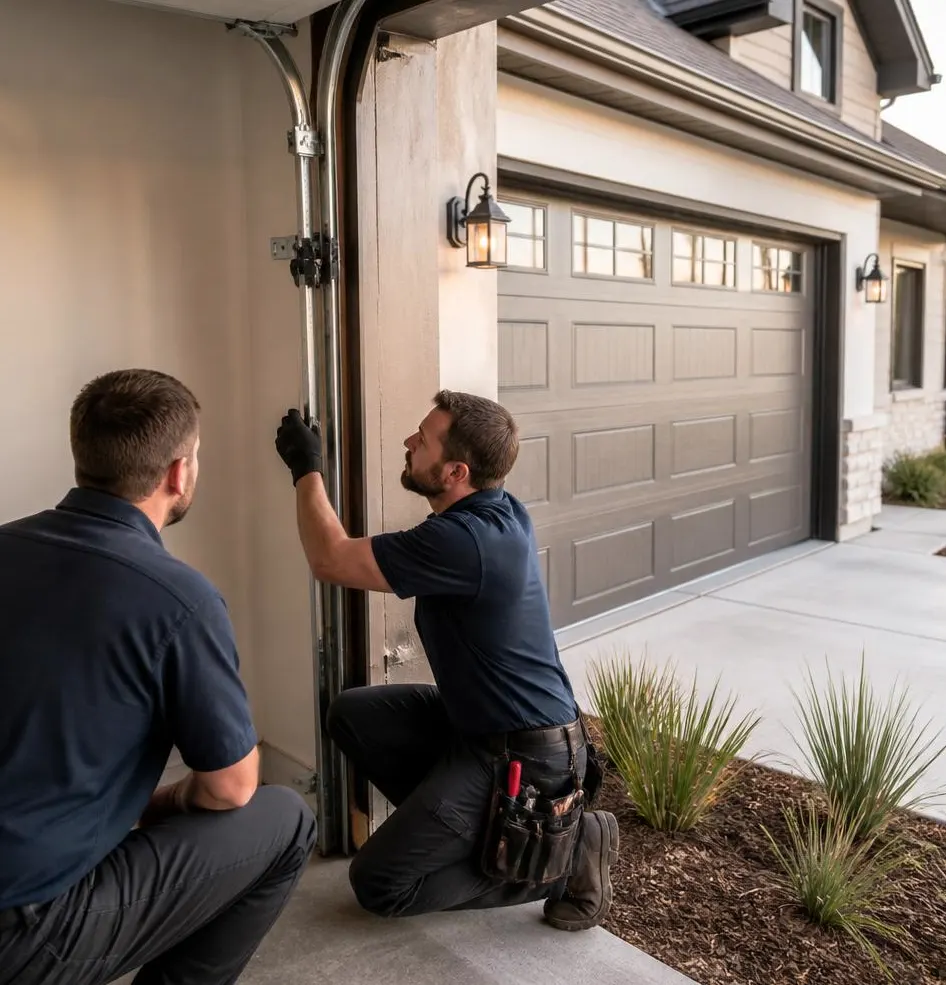
If weatherstripping isn't closing the gap, if the door looks crooked when it's down, or if you're not sure whether the issue is the seals or the door itself, that's when a technician should take a look instead of guessing. We handle garage door maintenance visits that check alignment, seals, rollers, and balance in one trip, and we handle garage door installation for homeowners ready to upgrade to an insulated door instead of patching an old one. Either way, you get a straight answer about what's actually letting air through.
If your garage door is working against your energy bill instead of for it, call Fresno Garage Door Service for a straightforward inspection and a clear recommendation, no upsell required.